
Fancy Coloured Diamonds, Explained
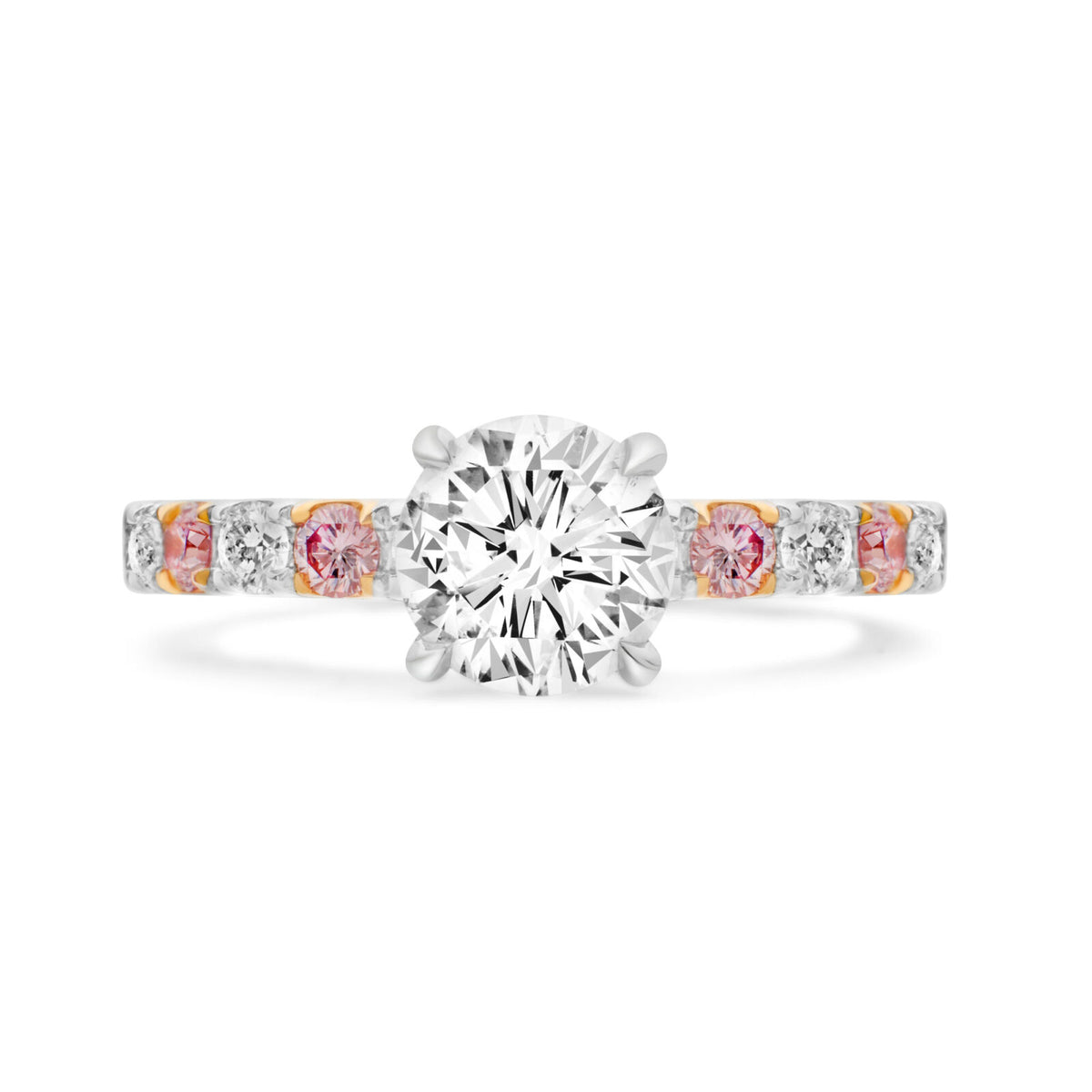
Most of us picture a diamond as colourless, but diamonds occur naturally in almost every colour, from soft pink and sunny yellow to cognac, olive and purple. Natural fancy coloured diamonds are extremely rare, and every one is unique.
Where the colour comes from
A colourless diamond is pure carbon. Colour appears when something changes that structure:
- Yellow comes from traces of nitrogen.
- Blue comes from traces of boron.
- Pink and red come from distortion in the crystal structure itself, created by immense pressure deep in the earth.
- Green comes from natural radiation over long periods of time.
A different kind of grading
White diamonds are graded on the D-to-Z scale, which measures how little colour a diamond has. Fancy coloured diamonds are graded the other way around: on how much colour they have, and how beautiful it is.
The GIA describes a coloured diamond using three things:
- Hue: the colour itself, such as pink or yellow
- Tone: how light or dark the colour is
- Saturation: how strong or intense the colour is
Tone and saturation together give the diamond its grade, using terms such as Fancy Light, Fancy, Fancy Intense, Fancy Deep, Fancy Vivid and Fancy Dark. In general, the stronger and purer the colour, the rarer the diamond.
Natural or treated?
Some diamonds are treated to change or improve their colour. A GIA coloured diamond report states whether a diamond's colour is natural or treated, so you always know exactly what you are buying.
Our coloured diamonds
Our coloured diamond collection includes rare Argyle pinks, fancy yellow diamonds and olive, purple and cognac diamonds. Explore our coloured diamond jewellery, our fancy yellow pieces and our coloured diamond engagement rings, or read The Argyle Story to learn why pink diamonds are so rare.